


Life Priority story
"Free Radical Theory on Aging"scientist Denham Harman
A Life Priority perspective on health, habits, and the choices that shape how well we keep showing up.
Themes in this story
1
Notice the pattern
2
Choose one next step
3
Repeat what helps
Read the story, then use these themes to decide what deserves attention in your own routine.
Scientist and researcher Denham Harmon is best known for his "Free Radical Theory on Aging" Dr. Harman developed the free-radical theory of aging in 1954. The theory holds that one of the byproducts of oxygen use is adverse chemical reactions in cells, which results in aging and, ultimately, death. Initially the theory was scoffed at, but by the 1980s, free radicals had increasingly become part of research into cancer, cardiovascular disease and strokes. Free radicals have since been linked to Alzheimer’s disease.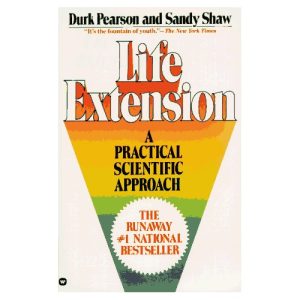
Durk Pearson & Sandy Shaw--Life Extension Book Dedication: This book is dedicated to Dr. Denham Harmon, originator of the free radical theory
on aging, whose papers first interested in this field.
"We heard about Dr. Denham Harmon’s free radical series of aging. Free radicals are damaging molecules with an up-paired electron. You’ve probable heard of antioxidants like vitamins C and E and beta carotene. Well one of the main functions of these antioxidant nutrients is to protect you from free radicals. Free radicals play a significant role in cardiovascular disease, certain types of cancer, quite likely aging itself." Sandy Shaw
Obituary Published in the Washington Post Nov.29 2014:
Themes to carry forward
Notice
Start with the pattern you can actually see
Energy, sleep, digestion, mood, movement, and recovery all leave clues. Paying attention to the pattern makes the next step more useful.
Simplify
A smaller routine is easier to keep
Choose one or two habits that fit your real week. Food quality, hydration, movement, sleep, and stress recovery usually matter before complexity.
Support
Match supplements to a specific priority
A focused supplement routine works best when it supports a clear goal and sits alongside the basics you already repeat.
Denham Harman, was a scientific researcher who developed a prominent theory on aging that is still used to study cancer, Alzheimer’s disease and other illnesses, died Nov. 25 2014, at a hospital in Omaha. He was 98.
The death was announced by Tom O’Connor, a spokesman for the University of Nebraska Medical Center, where Dr. Harman worked as a researcher since 1958. The cause was not disclosed.
Harvard Medical School professor David Sinclair said that Dr. Harman’s research inspired thousands of young scientists, including himself, to work on aging research.Dr. Denham Harman, shown here in 2006, has died at 98. (Nati Harnik/Associated Press)
“Dr. Harman is one of the most influential scientists of the past 50 years, bringing world-class science to what was once a backwater of biology,” Sinclair said in an interview, adding that Dr. Harman’s theory “is a cornerstone of the aging field.”
Dr. Harman thought that with a healthy diet, regular exercise and certain vitamins, particularly vitamins C and E, aging could be slowed by reducing the production of free radicals. He also recommended limiting alcohol consumption and not smoking.
Practical takeaways
Ways to apply it
Notice
- Energy
- Sleep
- Digestion
- Movement
Adjust
- Food quality
- Hydration
- Stress recovery
- Consistency
Support
- Clear goal
- Simple routine
- Professional guidance
- Follow-up
Richard Hodes, the director of the National Institute on Aging, called Dr. Harman a pioneer of aging research.
“The free-radical hypothesis has been a central element of the field ever since Dr. Harman’s landmark paper,” Hodes said. “Beyond his own work and continued exploration of the free-radical hypothesis, Dr. Harman’s contribution to science has helped lay the foundation for important, related areas of inquiry such as the mitochondrial and DNA-damage hypotheses.”
Related support
Support for the routine behind the story
Heart and brain support
Omega-3 Priority can be a daily anchor for cardiovascular and cognitive wellness routines.
View Omega-3Recovery rhythm
Magnesium Priority fits routines focused on muscles, stress recovery, and evening consistency.
View MagnesiumFind the right fit
Browse Life Priority formulas by goal when you want support matched to your current routine.
Shop formulasSunshine support
Vitamin D-3 Priority supports routines focused on bones, immunity, muscles, and healthy aging.
View Vitamin DNext step
Find the support that fits your next priority
The supplement quiz can help turn a broad wellness goal into a more focused routine.